

It’s late at night, and parents are sitting at the kitchen table after their child has gone to bed. They’ve been researching schools for weeks, imagining the possibilities, and finding a few they love. Now they’re trying to answer one very practical question:
Could we actually afford this?
So, they open a laptop and visit your school’s website.
They’re not ready to call or schedule a visit. First, they want to understand whether financial aid could be an option for their family and what exploring that option would involve.
Before anyone on your team has a chance to say hello, your website is already starting the conversation.
What will it tell them?
Help families find their starting point.
Families shouldn’t need to know your school’s terminology to find information about financial aid.
They may look for “financial aid,” “tuition assistance,” or “affordability.” Your school may call it indexed tuition, equitable tuition, flexible tuition, or something else entirely. That language may reflect a thoughtful approach to affordability, but a family visiting for the first time may not know what it means or know to search for it.

Keep your school’s terminology but connect it to familiar language. Make the information easy to reach from your main navigation and tuition page, and check whether your site search recognizes the words families are likely to use.
The first question is simple:
Can a parent find a clear place to begin, even if they don’t yet know what your school calls the process?
Share the purpose behind your financial aid program.
Once families find your financial aid page, they may still wonder:
Is this something our family should explore?
Your school’s financial aid philosophy provides important context. It explains why your school invests in financial aid, how that investment supports your mission, and what it means for your school community.
Give that philosophy a visible place on the page. A few welcoming, plain-language sentences can help families understand the purpose behind the application process. If financial aid reflects your commitment to bringing together students from a range of financial circumstances, say so. Explain what that commitment looks like at your school and who is encouraged to apply.
Then address the questions that may keep someone from taking the next step:
-
- Does applying for financial aid affect admission?
- Is there an income cutoff?
- Should we apply if we’re unsure whether we’ll qualify?
Your team’s inbox is a useful guide. The questions families ask repeatedly can reveal what your website hasn’t made clear.
The answers should reflect your school’s actual policies without suggesting that assistance is guaranteed. Together, a clear philosophy and practical guidance help families understand why financial aid matters to your school and whether to explore it for their own family.
Show them what to expect.
For a family ready to explore financial aid, the next question is practical:
What do we need to do?
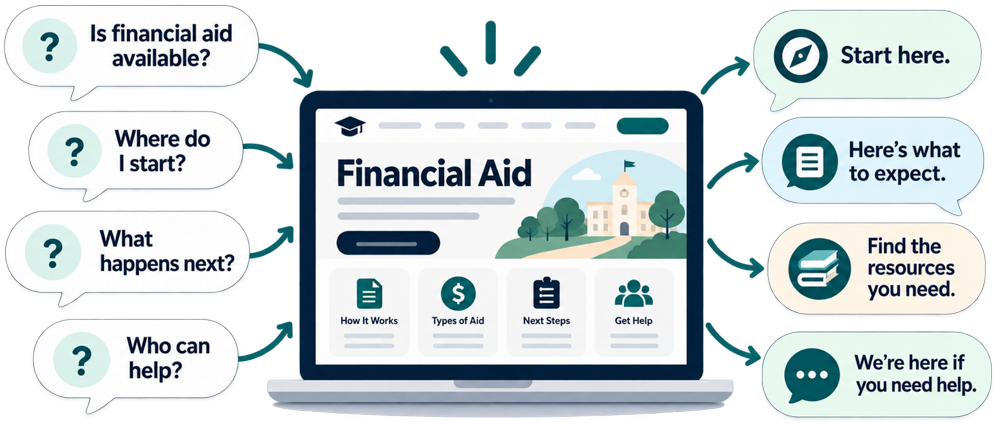
A page filled with forms, deadlines, and requirements can make it difficult to see the order of things. Give families a short overview that explains:
-
- Where to complete the application.
- When the application and supporting documents are due.
- What information and documents they should prepare.
- What happens after they submit.
- When and how they can expect to hear about a decision.
Be clear about distinctions that may be obvious to your team but unfamiliar to parents. If submitting the application is only one step toward completing their financial aid file, say so. If additional documentation may be requested during review, help families understand that possibility up front.
This is especially helpful when application platforms or documentation requirements change. Returning families need to know what is different, too.
Clear expectations give families a better chance to arrive prepared. They can also reduce avoidable clarification emails and follow-up work, leaving your team more time for conversations that need individual attention.
Leave room for real life… and a real person.
Even with clear instructions, some families will reach a point where they wonder:
What if our situation doesn’t fit?
A parent may own a business, have experienced a recent job loss, live in a separate household, or be unable to provide a required document. Financial information is deeply personal, and asking for help can feel uncomfortable when someone isn’t sure how their circumstances will be received.
Your website doesn’t need to explain every possible situation. It can acknowledge that circumstances vary and let families know they’re welcome to reach out for guidance.
Consider the difference between:
“Additional documentation may be required.”
and:
“Depending on your family’s circumstances, we may ask for additional documents to better understand your financial picture. If you’re unsure what to provide, please contact us so we can help.”
Both communicate a requirement. The second also explains its purpose and offers a way forward.
Read your page aloud. Does it sound like the people families will meet at your school? Are expectations clear? Does the language feel respectful and approachable, especially when describing sensitive circumstances or required information?
Then make sure the invitation leads somewhere useful. Identify the right contact and explain how to reach them. A family shouldn’t have to search a staff directory or scroll through a lengthy PDF to figure out who can answer a financial aid question.
Sometimes the most helpful next step is a conversation. Make it easy to start one.
Walk through the experience together.
A welcoming financial aid page is only helpful if the information reflects what families will actually experience.
Deadlines move. Platforms change. Documentation requirements shift. Staff responsibilities evolve. An updated financial aid page may sit alongside an old FAQ, a previous year’s PDF, or an admission page with different instructions.
Families don’t experience your website in departments. They experience your school.
Bring together the people who manage financial aid, speak with prospective families, and maintain your website. Follow the path a parent might take, from the tuition page through the application instructions and linked resources.
Does the information agree? Do the links and buttons work? Are the dates and contacts current? Does the process described online match what your team tells families in conversations and emails, and at open houses?
Try it on a phone, too. A link that is obvious on a desktop may be easy to miss on a smaller screen.
As you go, keep three questions top of mind:
-
- Can I find what I need?
- Do I understand what to do next?
- Do I know where to turn for help?
Then consider the experience as a whole. Does it convey the care and thoughtfulness families can expect from your school?
Treat this as part of preparing for each financial aid season. A little attention now can prevent confusion for families and extra work for your team later.
The conversation may already be happening.
Back at that kitchen table, the family doesn’t need every answer tonight. But they’re hoping to find enough information to understand whether your school could be within reach, what to do next, and where to turn for help.
A clear explanation and a welcoming tone can give families a reason to keep exploring. Together, they help shape a first impression of your school and offer an early glimpse of what it might feel like to be part of your community.
Before your team has the chance to welcome that family, your website has a chance to help them feel welcome.
The first financial aid conversation may happen long before a family picks up the phone, attends an open house, or submits an application.
It may already be happening on your website.